
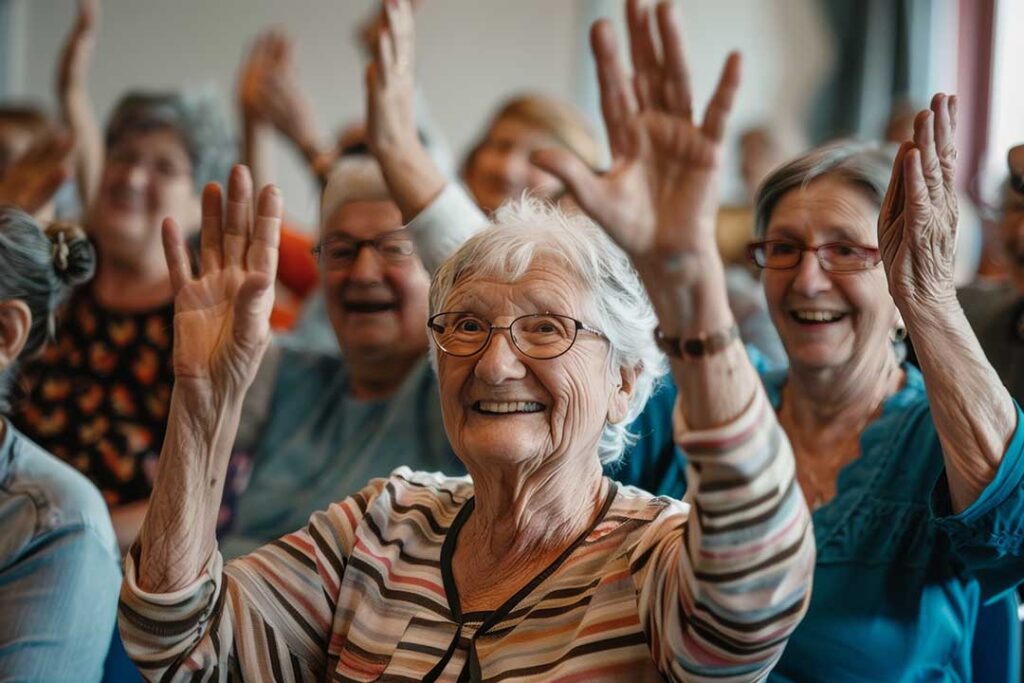
Intergenerational activities bring older adults and younger people together for purposeful, recurring interaction. In assisted living, these programs can support emotional well-being, cognitive engagement, physical activity, and a stronger sense of connection to the surrounding community.
For residents of Narberth, PA, intergenerational programming may be especially meaningful because many households include several generations living nearby or staying connected across relatively short distances. Even when family members cannot visit regularly, thoughtfully planned activities can create opportunities for conversation, learning, and companionship.
What are intergenerational activities in assisted living?
Intergenerational activities are organized experiences that involve people from different age groups. In an assisted living setting, participants may include residents, children, teenagers, young adults, family members, educators, or community volunteers.
Examples include:
- Reading groups involving older adults and children
- Art, music, or craft sessions
- Oral history and storytelling projects
- Gardening and seasonal planting
- Board games, puzzles, and simple technology lessons
- Shared holiday, cultural, or community events
- Cooking demonstrations adapted for safe group participation
- Walking, stretching, or movement activities suited to all ages
The goal is not simply to entertain residents. Effective activities give each generation a meaningful role. An older adult may share knowledge about family traditions, local history, gardening, music, or work experiences, while a younger participant may offer curiosity, creativity, or help with a new form of technology.
How can these activities benefit older adults?
Regular interaction with younger people can reduce feelings of isolation and provide residents with a sense of purpose. A visit has greater value when it includes conversation, cooperation, or a shared project rather than passive observation.
Potential benefits include:
Greater emotional connection
Residents may look forward to recurring visits and develop familiar relationships with younger participants. These connections can add variety to daily routines and provide opportunities for laughter, affection, and personal recognition.
For someone who has experienced changes in family structure, mobility, or social independence, a consistent intergenerational relationship may help restore a feeling of belonging.
Opportunities to contribute
Older adults are often viewed primarily through the lens of care needs. Intergenerational activities can shift attention toward their abilities, memories, judgment, and life experience.
A resident who teaches a card game, explains a family recipe, or describes how seasonal traditions were observed is contributing knowledge rather than simply receiving assistance.
Cognitive stimulation
Conversation with younger people can encourage residents to recall stories, explain ideas, answer questions, and make decisions. Activities such as storytelling, music, puzzles, and crafts may engage memory, language, attention, and problem-solving.
These activities should not be presented as a treatment for dementia. Cognitive changes vary widely, and participation should be adapted to each person’s interests and abilities.
More physical activity
Some programs naturally include movement, such as planting flowers, tossing a soft ball, dancing while seated, or walking through a safe indoor or outdoor area. Movement should be optional and supervised according to individual care plans.
In a community with changing seasons, indoor options are useful during periods of cold, heat, rain, or icy conditions. Outdoor activities can be planned during comfortable weather with attention to shade, seating, hydration, and secure walking surfaces.
Do younger participants benefit too?
Yes. Intergenerational programs are not intended to benefit only older adults. Younger participants may gain patience, communication skills, confidence, and a more realistic understanding of aging.
Children and adolescents often ask direct questions. With appropriate guidance, these conversations can help them understand that older adults have varied personalities, interests, histories, and abilities. This can replace stereotypes with personal familiarity.
Younger people may also benefit by:
- Practicing respectful conversation
- Learning to listen to someone with a different life experience
- Building confidence through teaching or performing
- Developing empathy without being placed in a caregiving role
- Discovering history through first-person stories
- Seeing adaptation and resilience in everyday life
The relationship should remain balanced. Younger visitors should not be expected to provide personal care, manage difficult behavior, or take responsibility for a resident’s safety.
What makes an intergenerational program successful?
The strongest programs are consistent, voluntary, and designed around shared interests. A single performance or holiday visit may be pleasant, but repeated contact is more likely to support genuine relationships.
Successful programs generally include:
- A clear activity with an understandable purpose
- Small groups that allow conversation
- Simple instructions and flexible pacing
- Seating and sound levels that support participation
- Choices for residents who prefer observing
- Preparation for younger visitors about respectful communication
- Staff oversight and appropriate boundaries
- Adaptations for hearing, vision, mobility, and memory differences

Activities should not depend on every resident being outgoing. Some people may prefer one-on-one conversation, while others may enjoy watching a performance or working quietly beside a child.
How should activities be adapted for residents with dementia?
Residents living with dementia can participate when activities are familiar, sensory, brief, and flexible. The emphasis should be on comfort and engagement rather than completing a task correctly.
Helpful approaches may include familiar songs, folding towels, sorting large objects by color, looking through family-safe photographs, watering plants, or decorating simple items. Younger participants should use short sentences, allow extra response time, and avoid correcting residents unnecessarily.
If a resident becomes tired, confused, or distressed, the activity should pause or change. Participation is never required, and a calm exit should be available.
What are common misconceptions?
One misconception is that intergenerational activities require large organized events. In practice, a ten-minute conversation, shared puzzle, or small gardening task may be more meaningful than a crowded gathering.
Another misconception is that younger visitors must be naturally comfortable around older adults. Preparation matters. Children and teenagers may need guidance about speaking clearly, respecting personal space, and accepting that a resident may not respond immediately.
It is also inaccurate to assume that every older adult enjoys spending time with children. Some residents may prefer conversations with adults, music sessions, or activities involving animals, nature, or personal hobbies. Choice is central to dignity.
How can families support this type of engagement?
Families can share information about a resident’s interests, traditions, former occupations, favorite music, or preferred conversation topics. These details can help staff plan activities that feel personal rather than generic.
Family members may also encourage age-appropriate visits involving a specific purpose, such as bringing photographs to discuss, completing a simple craft, or listening to a resident’s stories. Short, predictable visits are often easier for both the resident and the younger visitor than long, unstructured stays.
In Narberth, seasonal changes and close-knit neighborhood patterns may create natural opportunities for family-based projects, indoor gatherings, and shared outdoor activities when conditions are comfortable. The most useful programs remain attentive to transportation, weather, accessibility, and the schedules of participating families.
What should families ask about a program?
Families evaluating an assisted living community’s intergenerational programming can ask:
- How often do activities occur?
- Are residents able to choose whether to participate?
- What age groups are involved?
- Are activities adapted for dementia, hearing loss, or mobility limitations?
- How are younger participants prepared and supervised?
- Are programs recurring, or limited to occasional events?
- What happens if a resident becomes tired or uncomfortable?
- How does the program protect privacy and personal boundaries?
The answers can reveal whether a program is built around meaningful participation or simply added as an occasional attraction.
Intergenerational activities work best when they respect every participant as a person with preferences, skills, limits, and stories. In assisted living, that approach can make daily life more socially connected while helping younger people understand aging through real relationships rather than assumptions.
